

2027 Diploma Enrolment Coming Soon

Enrolment for the 2027 Hand & Lock Diploma in Contemporary Hand Embroidery is opening soon. If you’d like to secure early access you can register via our Early Access Form.

If you’re considering joining the Diploma, we strongly recommend taking at least one Hand & Lock Online Course beforehand. This is a great way to familiarise yourself with our teaching style, build confidence with embroidery techniques and get a head start on the skills you’ll use in the Diploma. You can explore our full range of online courses here.

Module 1002: Tambour Embroidery

£975.00
Tax included Shipping calculated at checkout.

Diploma Kit (Date and Time)
Description
Location: This course is delivered online via Zoom & WhatsApp
Duration: 10 Week Embroidery Course (1 x 3 hour session per week for 10 consecutive weeks) 

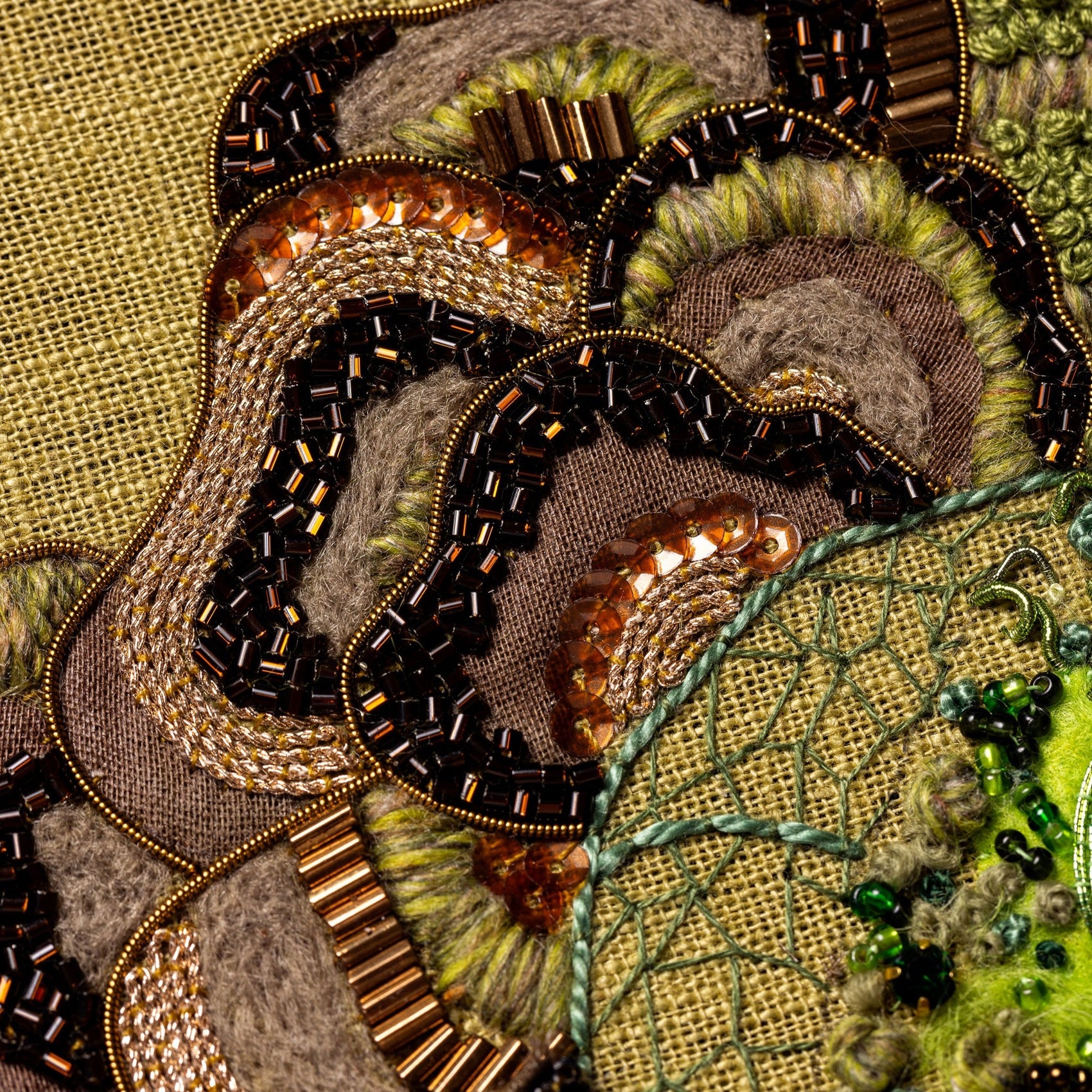
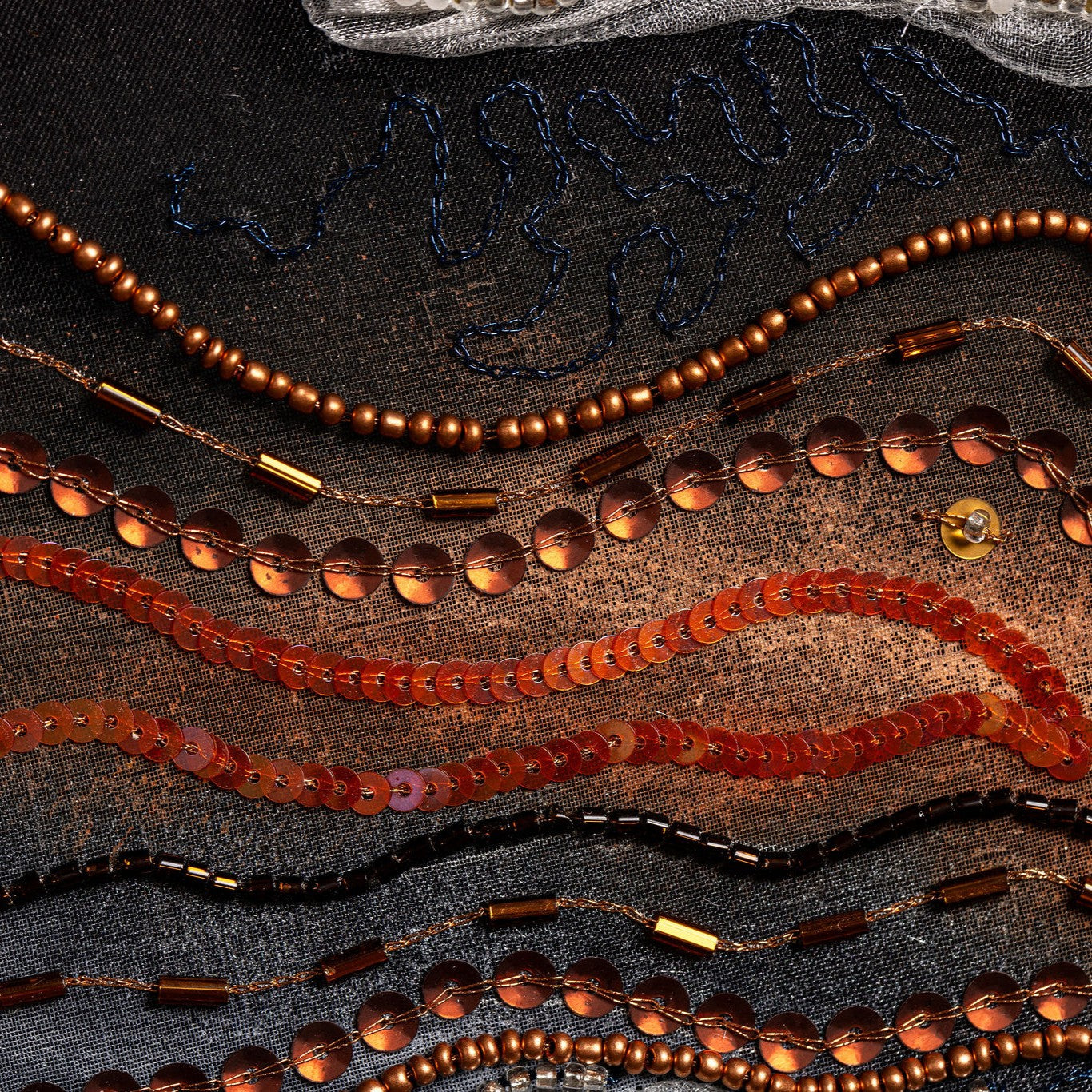
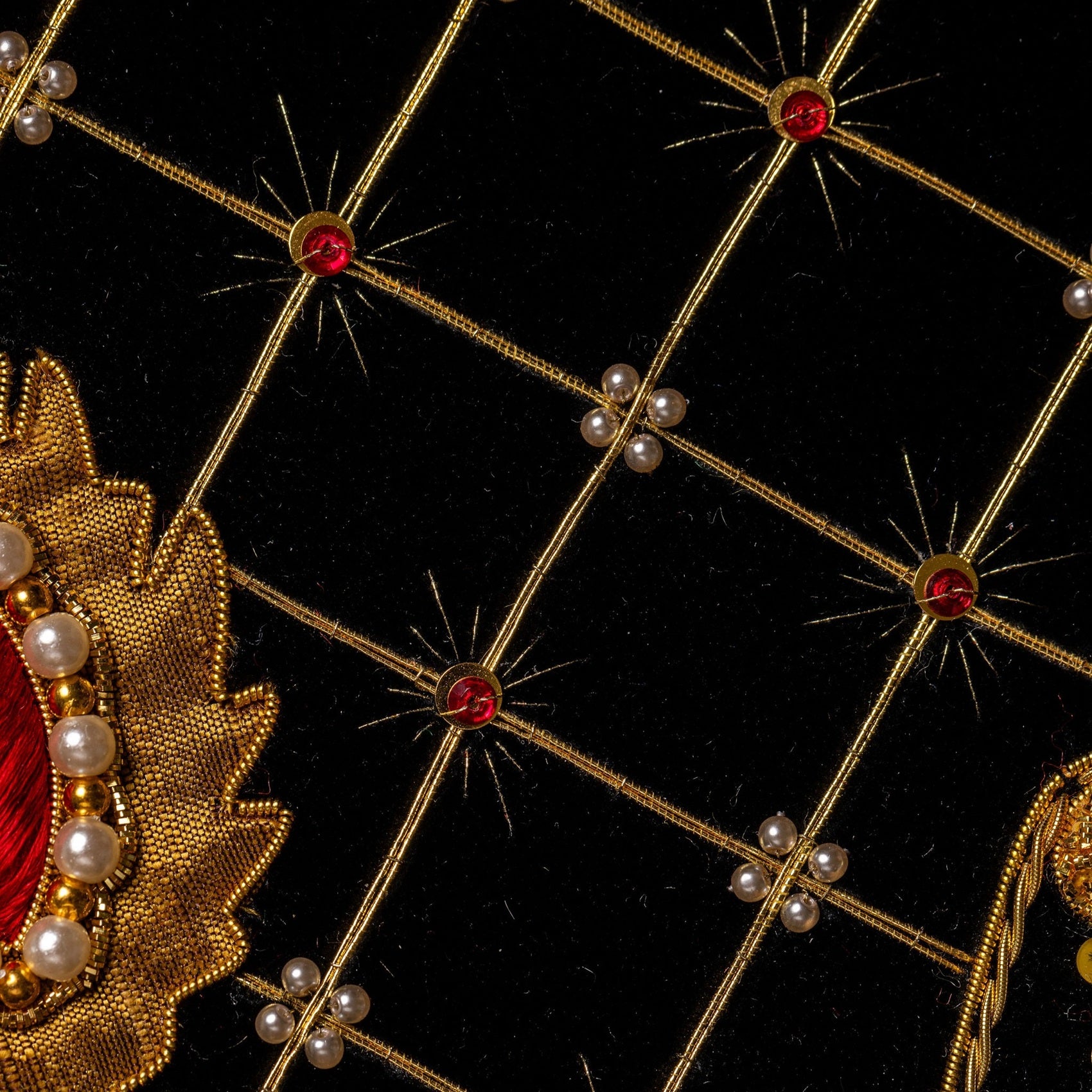
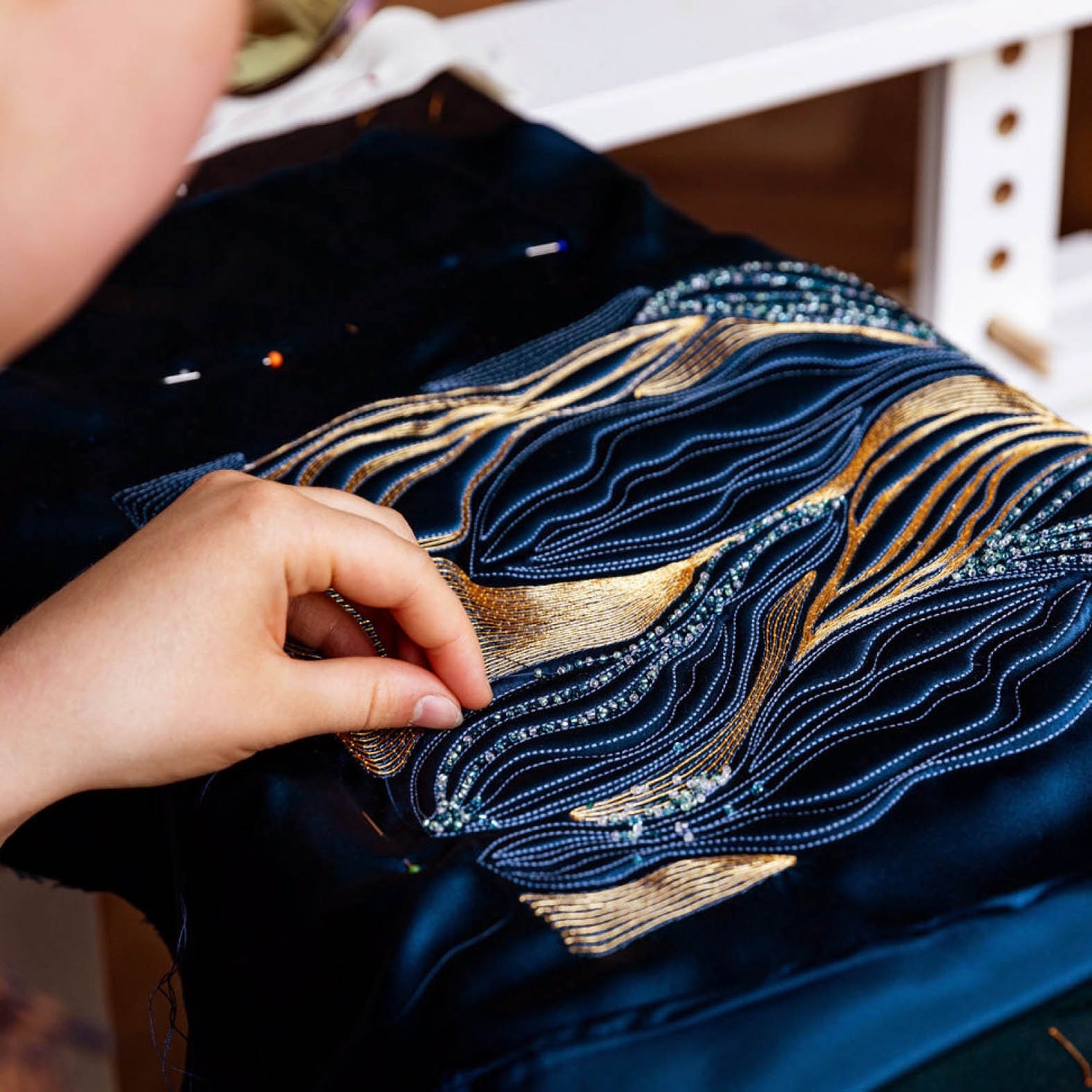
Tambour embroidery is a traditional decorative embroidery technique that uses a fine hooked needle, known as a tambour hook. Tambour embroidery can be worked using a variety of threads and is especially valued for its ability to incorporate beads, sequins, pearls, and metallic threads into the design. Renowned for its elegance and craftsmanship, tambour embroidery is widely used in haute couture, bridal wear, luxury fashion, and fine textile decoration, where it adds texture, embellishment, and exceptional decorative detail.

This unit will teach you how to develop a design and piece of embroidery using Luneville and Aari techniques. You will learn the mechanics of creating pieces with a Tambour Hook working from the underside and top side of the fabric.

Entry Requirements:  No formal qualifications are required for joining the course, but those who have never embroidered before are encouraged to attend at least one Hand & Lock online course first.

Unit Theme
Rhythmic Forms

Each of our Diploma units has a bespoke design brief to help you begin to craft your design ideas. *Disclaimer: The amount of inspiration you take from the brief is up to you, the brief is designed as a guide to assist you in starting the design process and can be taken in any direction you desire as long as it is explained. 

Rhythm is a fundamental force that shapes both the natural world and human expression. It can be found in the repetition of waves, the pulse of music, the symmetry of architecture, the movement of the body, and the cycles of nature. Across cultures and disciplines, rhythmic forms have been used to create harmony, structure and visual flow, guiding the eye and evoking emotion through pattern, repetition and movement.

Rhythm exists not only through repetition, but through variation, interruption, progression and contrast. It may be regular and predictable, or irregular and organic. It can appear as flowing, continuous movement or as bold, geometric order. Whether found in the branching of trees, the spirals of shells, the migration of birds, the phases of the moon, the ripples left by rain on water, or the tessellations of Islamic art, rhythmic forms reveal the underlying systems and patterns that connect the world around us.

Throughout history, artists, designers and craftspeople have explored rhythm as a visual language. From optical movement, traditional textiles, architectural ornament, ceramics, calligraphy and contemporary digital pattern-making, rhythm has been used to create both structure and expression. Scientific phenomena such as sound waves, topographical maps, cellular structures, crystallisation, orbital paths, mathematical sequences, fractals and fluid dynamics also provide rich sources of rhythmic inspiration.

Consider repetition, movement, symmetry, progression, and variation as your core visual principles. Explore how rhythm can be expressed through line, shape, spacing, scale and direction. Think about how motifs evolve across a surface, how patterns accelerate or slow, how forms overlap and interact, and how positive and negative space contribute to visual movement.

Diploma Timetable

Week 1: Introduction to the course

Students meet each other and tutors

Course overview (mark schemes, submitting work, deadlines, how the course will run)

Brief Overview (review of the content of the brief for the Module)

Research and Design (design techniques, creating moodboards, using resources, Hand & Lock resources, guidelines for research and design)

Guidelines of work that need to be produced 

Week 2: Design Session

In this session you will learn the basics of designing. Taking elements of your mood board and creating an inspiring composition. 

Your tutor will show you several different ways to start creating your initial design ideas as well as some drawing exercise to get you warmed up.

Week 3 - 4: Embroidery Sampling

Embroidery Sampling - week by week sessions of taught content using the embroidery kit and materials provided to create your class sampler

Students will be working on their design ideas in their own time. Emailing ideas over to the tutor for feedback.

Week 5: Application & Embroidery Sampling

Design Application presentation 

Embroidery Sampling - week by week sessions of taught content using the embroidery kit and materials provided to create your class sampler

Week 6: Embroidery Sampling

Embroidery Sampling - week by week sessions of taught content using the embroidery kit and materials provided to create your class sampler

Week 7: Final Design Presentations

Students to present their final designs and talk about their designs to students and tutors 

Week 8: Stitch Planning

Stitch plan presentation, students will learn what is required and how to turn their design into a set of stitch plans. 

Tailored help and advice sessions for students as they realise their final designs tweaking stitching and plans week by week

Week 9: Combining Embroidery Techniques

Learn how to take all of the embroidery techniques you have learnt and create something new and relevant to your final design.

Week 10: Your Formative Hand In 

Final session with the tutor, help and advice on designs, submission guidelines etc. 

How to create a finalised Diploma Module Submission, looking at past students' submissions.

After the live taught teaching session (optional)

Week 24: Formative Submission 

All students hand in their first submission for feedback and advice.

Between week 24 - 104: Final submission 

Students will have two years from the start of the course to create their final piece. 

Kit Information

Kit List

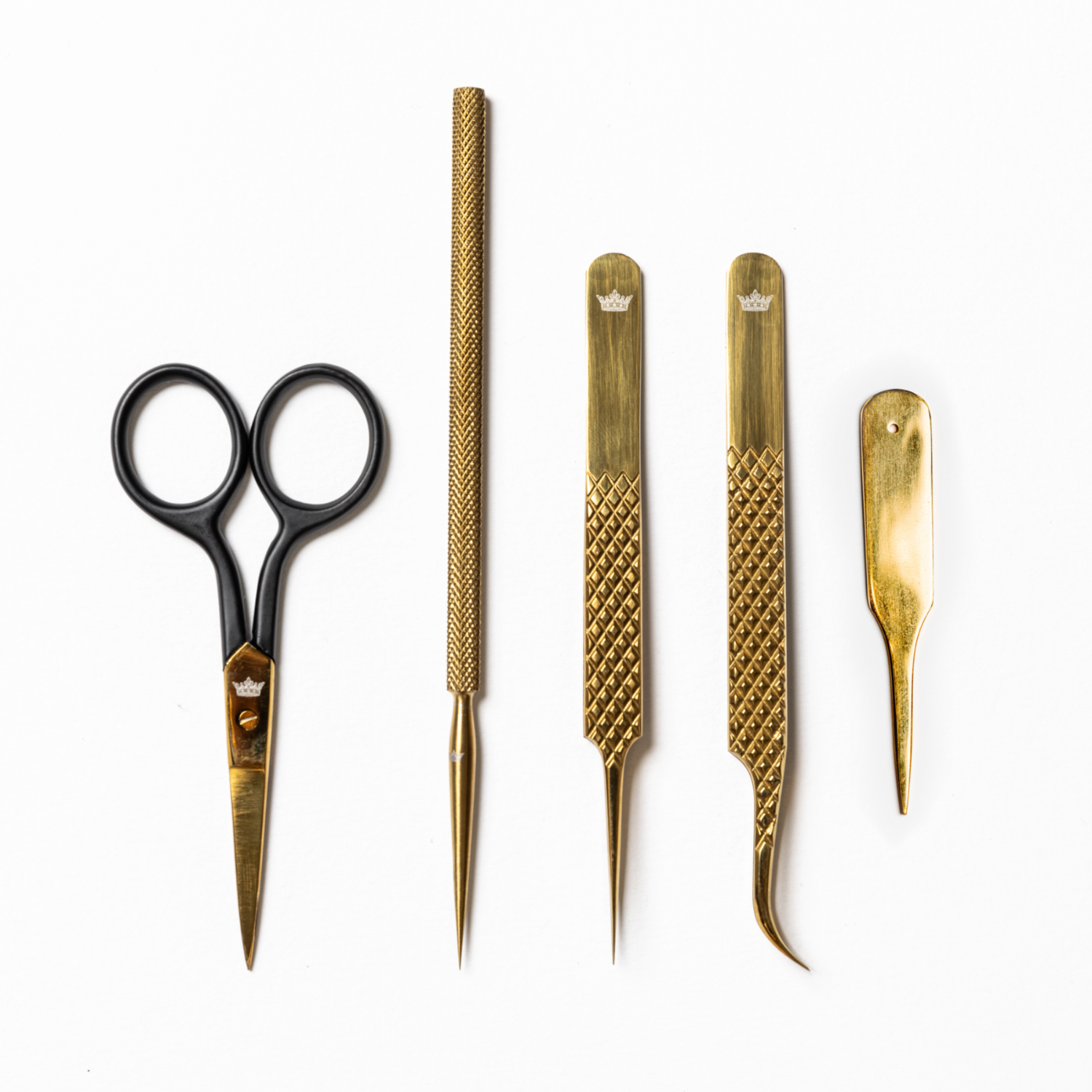
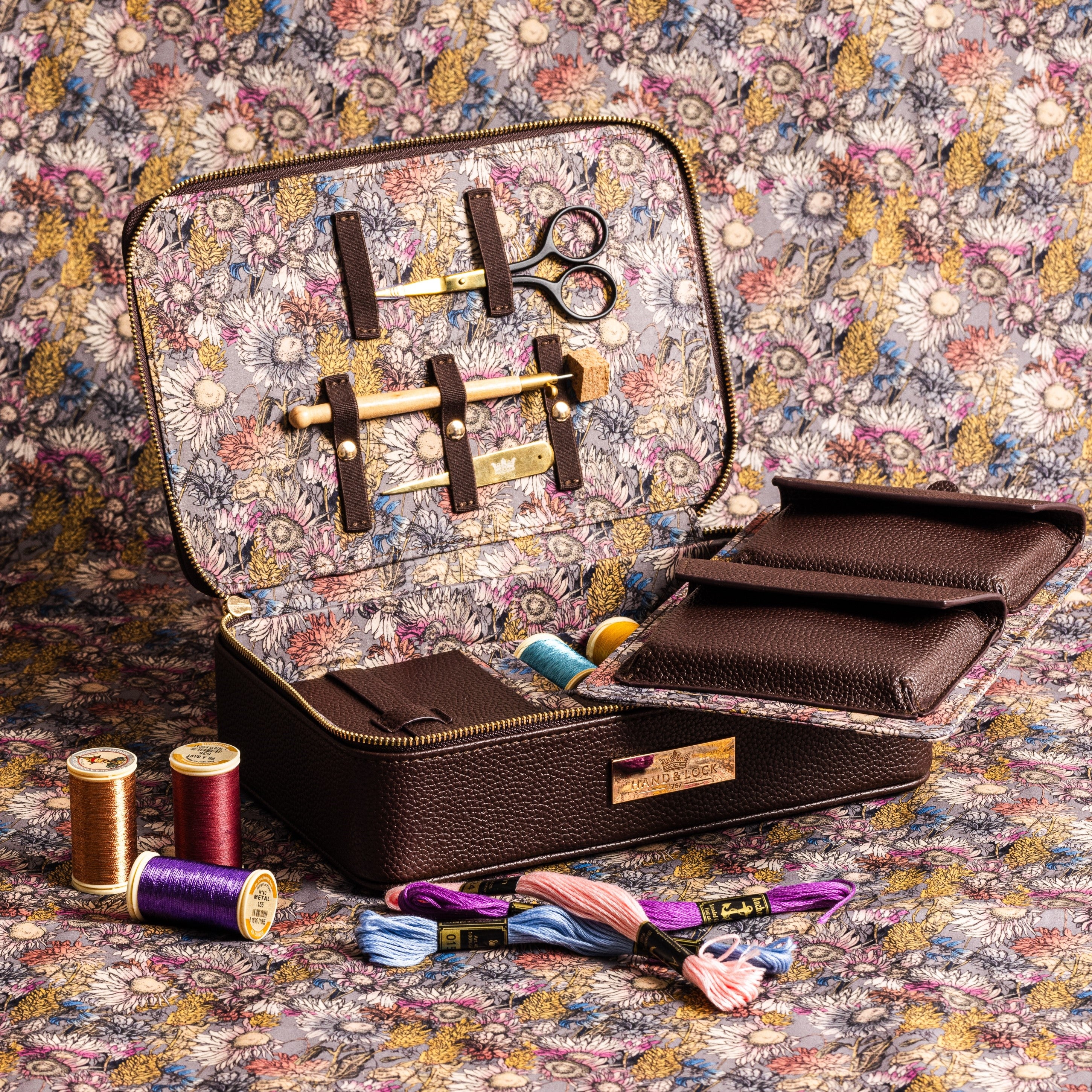
Included within this course is a generous kit of basic materials for you to produce the fundamental technique samples within this unit of the Diploma.

We encourage you to be as creative as possible and we would love for you to source your own original materials to add to the final piece you create with us. When you sign up to the course we will share our comprehensive list of suppliers for any materials you would like to purchase additionally. This is not mandatory but it is encouraged as you will be able to explore individual design creativity. Students will also receive 10% off the Hand & Lock shop online and in person for the duration of their course. 

You will need to source a slate frame or 10 inch embroidery hoop for working each unit (this frame/hoop can then be used across all of your units).Students will also need to have drawing and designing implements for the design elements of the course. Please ensure you have pens, pencils, coloured pencils, paints and any additional materials you would like to design with. 

See below for Technical and Shipping information, please make sure to read all of this before booking

How the Course Works 

Embroidery Design Elements

Each unit of the Diploma includes an element of hand embroidery design. This can often be seen as intimidating but we encourage you to see it as the most exciting aspect of the course as you can craft your own pieces. Our tutors will guide you through the design process from creating moodboards and researching your designs to creating your final stitch and padding plans. No prior design or drawing experience is required for the course.

Embroidery Techniques

Chain stitch, Aari techniques (applying beads and sequins), Luneville techniques (applying beads and sequins), vermicelli, vermicelli with beads or sequins, rich stitch (over wire, couched, applique), Pulled stitch (with thread, beads and bugle beads), Flea stitch (layering sequins), fishscale, bead padding, fabric manipulation with a tambour hook, sugar stitch 

You will also learn how to take these techniques and apply them to your design. Learning how to manipulate and experiment with the traditional embroidery to create something new and exciting. 

Assessment Information

Assessment of work is completely optional, students will be awarded with a Certificate of Completion if they choose not to submit their work for marking and a Certificate of Achievement if they do. The Certificate of Achievement will detail the level achieved through the assessment process. There are three submission points. The first two submissions occur as you are completing each unit to provide you with detailed feedback as you work through the unit to give you a clear direction and understanding of improvements and developments. The final submission is then used to determine your final assessment mark. 

Hand & Lock School Teaching Demonstration

Technical Info & Shipping

Technical Information

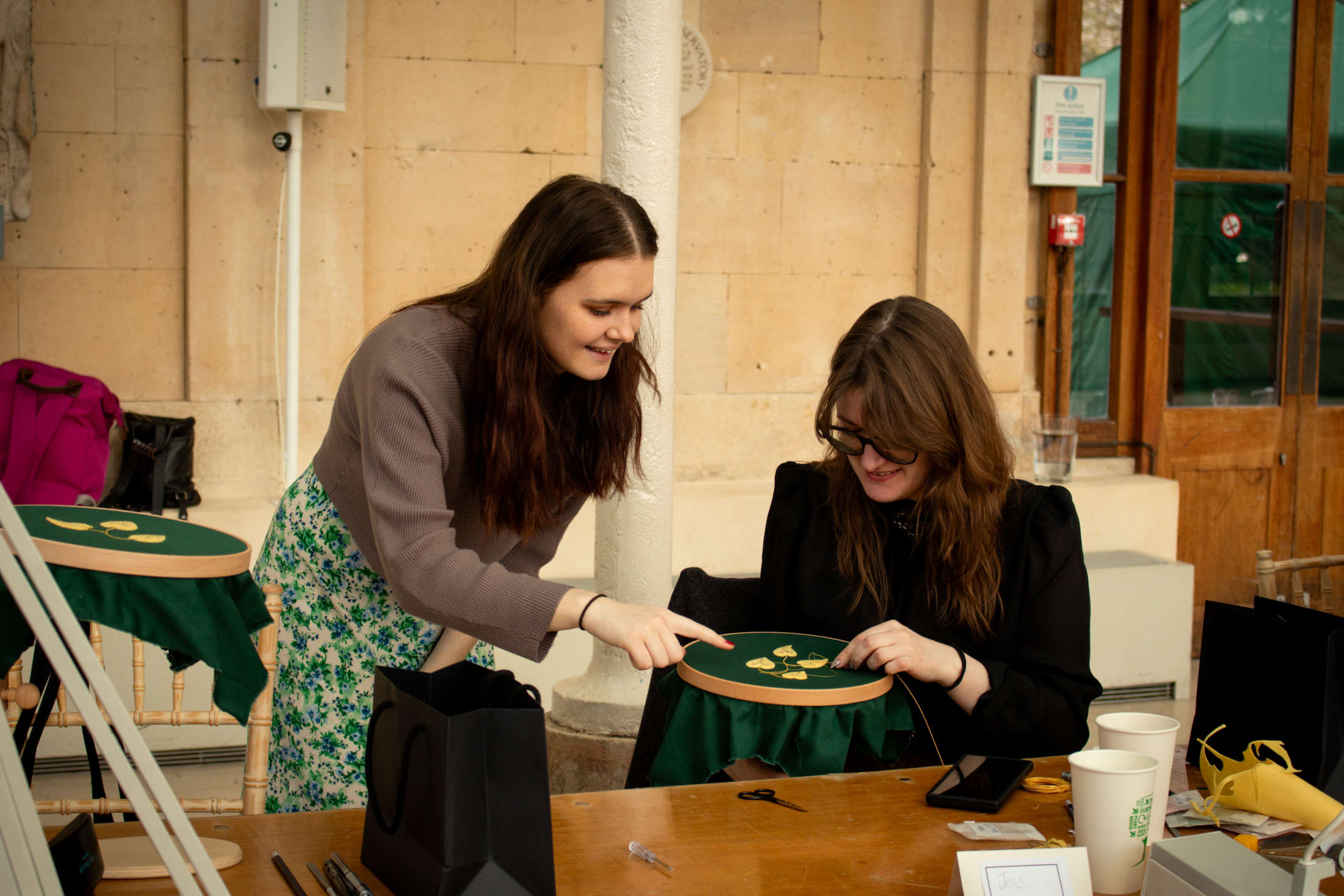
Our online courses are delivered via Zoom using a high-quality visualiser for close-up stitching. We record each session so you can catch up or revise later. You’ll also be added to a dedicated WhatsApp group, where students and tutors can connect, share photos, ask questions and cheer each other on.

See our guide to downloading Zoom and WhatsApp here

All courses are run on UK time, please check here for help converting to another time zone.

Shipping Information

Included within this course is a kit of basic materials for you to produce the fundamental technique samples within this unit of the Diploma. To complete your final piece with your own design you will be encouraged to curate your own stock of materials to use in a contemporary way. Your kits will be shipped out from Hand & Lock as part of the booking of this course

UK Shipping - Parcels are shipped via Royal Mail. We recommend UK customers book no later than 1 week before the course start date for your kit to arrive on time.

International Shipping - Parcels are shipped via FedEx. We recommend International customers book no later than 2 weeks before the course start date for your kit to arrive on time. All taxes, duties and/or tariffs are paid at checkout combined with your shipping cost.

PO Boxes / Third Party Couriers - Do not use PO Boxes or third-party courier addresses. Hand & Lock cannot be held responsible for delays, lost parcels or additional costs incurred.

Please be sure to double check your shipping address and email before ordering

Cancellations

Diploma Courses are non refundable, please see our Cancellation Policy here.

Please note the Diploma is not eligible as part of the Hand & Lock Reward Scheme, so points cannot be earned or spent on the Diploma.

Additional Information